
24/7 Emergency
Water Damage Restoration in Washington, NJ
Water damage in Washington can range from a slow appliance leak to a full basement flood, but the fix starts the same way: fast extraction and measured drying. Sunrise technicians are IICRC-certified under the S500 standard, which means every job is documented with moisture readings, category classification, and daily drying logs. From extraction to reconstruction, we manage the whole job while coordinating directly with your insurer. Most covered Washington claims cost homeowners nothing out of pocket. Full water damage services.
Call Now: 215-399-6538
Request Emergency Service

24/7 Emergency Response

Residential & Commercial

Insurance Billed Directly
In addition to Washington, we handle water damage emergencies in nearby Deptford, Glassboro, Pitman, and Monroe – with unified 60-minute dispatch across all these communities.
Services Included
Washington, NJ Comprehensive Water Damage Solutions
Eight core services address every stage of water damage, from emergency extraction to structural drying. Fast response matters: secondary damage multiplies quickly after the first 24 hours. Every job is documented from start to finish – moisture readings, drying logs, and photo documentation for insurance claims. Call (215) 399-6538 for immediate dispatch. Services available 24 hours a day.

Water Damage Services
Emergency water damage response covering all common causes in Washington Township: Licensed and insured for residential and commercial properties throughout Gloucester County. Licensed and IICRC-certified.

Water Loss Cleanup
Water loss response with extraction and structural drying: Extraction, drying, and antimicrobial treatment to restore pre-loss conditions. Call 215-399-6538 anytime.

Basement Water Damage
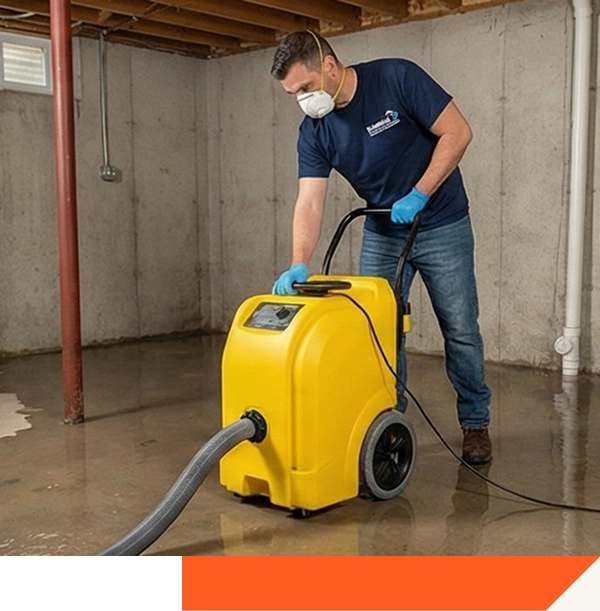
Basement water damage mitigation for Washington Township – fast, certified, thorough. Sump pit, floor drains, window wells, and foundation walls all inspected and addressed. Same-day service available in Washington Township.

Flood Cleanup
Complete flood cleanup for Washington Township homes – no shortcuts, no guesswork. Flood events in Gloucester County range from category 1 to black water – we handle all three with proper protocol. Most covered claims: $0 out of pocket.

Water Pump Outs
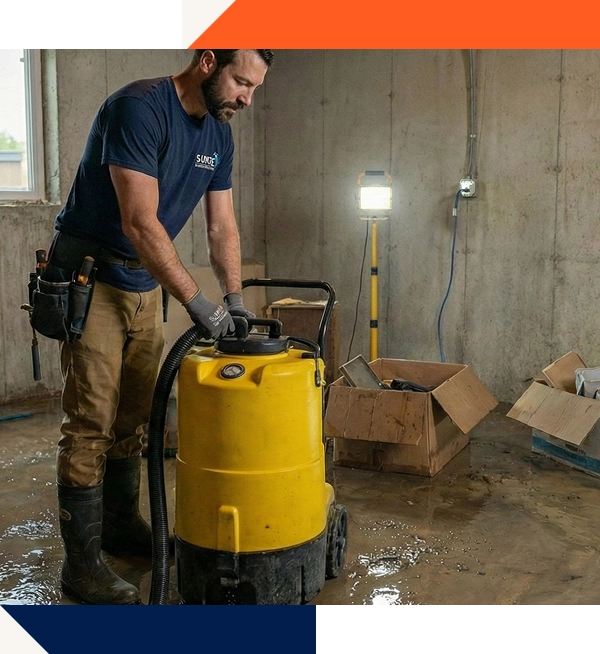
Submersible and trash pump service for post-storm and appliance flooding in Washington Township. Sump pit, basement, crawl space, and pooled-area water removed fast. IICRC-certified technicians.

Drying & Dehumidification
Washington Township structural drying – every material confirmed dry before we close the job. Refrigerant dehumidifiers for high-humidity summer jobs; desiccant units for tight basements and crawl spaces. Full IICRC S500 drying protocol.

Storm Damage Cleanup
Washington Township storm recovery: debris removal, water extraction, structural drying. Post-storm mitigation to stop water intrusion, followed by full drying and mold prevention. Insurance coordination included.

Sewage Cleanup
IICRC-certified sewage cleanup for Washington Township properties: Biohazard containment, category 3 water removal, and antimicrobial treatment to health-safe standards. Most covered sewage events billed direct to insurance.
Our Services
Residential and Commercial Water Damage Services
Residential Water Damage
We serve homeowners and property managers equally – the same crew, equipment, and protocols for both. Our crews treat contents and finishes with care throughout the extraction, drying, and reconstruction phases. All restoration work follows IICRC S500 standards, whether residential or commercial.
Commercial Water Damage
Whether it’s a single office suite or an entire commercial complex, our crews bring industrial drying equipment and restore the space while tracking every step for insurance. IICRC S500-certified technicians handle every commercial job. Commercial-grade air movers and dehumidifiers run continuously until moisture readings confirm the structure is dry. IICRC S500-compliant restoration with full documentation for your property manager and carrier.
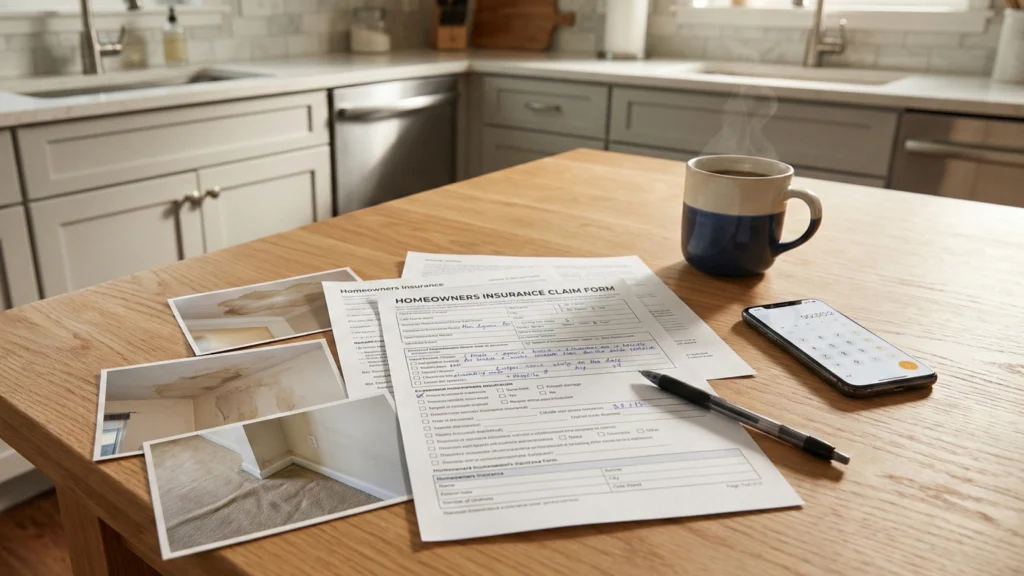
Insurance Claims Handled
Why Choose Sunrise for Water Damage?
Water Damage Restoration Services
Insurance Claims Handled
Insurance Claims Support
Fast commercial restoration for Washington property managers and business owners. IICRC-certified crews, commercial-grade equipment, insurance-direct billing.

Water Damage Restoration Process
Step 1, Emergency Response & Inspection (within 60 minutes). A 60-minute response is our standard. Once on site, we stop the water source if accessible and conduct a full damage evaluation before positioning any drying equipment. Thermal imaging cameras and calibrated moisture meters reveal moisture trapped behind drywall, underneath flooring, and in structural voids. Every zone we identify gets photographed before equipment setup. Following IICRC S500, we assign a Category (Cat 1 clean / Cat 2 gray / Cat 3 black) and Class (1-4) to the damage event. A documented mitigation plan is prepared for your insurance adjuster. Assessment time: 30-60 minutes.
Step 2, Water Extraction & Structural Drying. Standing water comes out first, using truck-mounted extraction at 100+ gallons per minute. When contaminated water is involved, containment barriers isolate the affected zone before any equipment is placed. Commercial air movers run across saturated surfaces and LGR (Low Grain Refrigerant) dehumidifiers remove moisture from the air. Cavity drying attachments handle wall assemblies where surface equipment has no effect. Daily moisture monitoring continues across all materials until every reading reaches IICRC dry standard – generally 3-5 days for drywall, 5-10 days for hardwood, 7-14 days for concrete.
The reality of water damage restoration is that drying is only one part of a larger process. Restoration can mean pulling out and replacing drywall, baseboards, flooring, and insulation depending on how far the moisture spread. Washington Township’s sewer laterals – many dating to the 1960s-70s post-war expansion – make Category 3 events common in older Turnersville and Grenloch sections. In sewage backup or exterior flood situations, materials usually need to be removed in their entirety and the area sanitized before rebuilding can happen. In situations involving both fire and water damage, our team coordinates full restoration for both. We handle direct insurance billing on covered events – most homeowners pay nothing out of pocket.
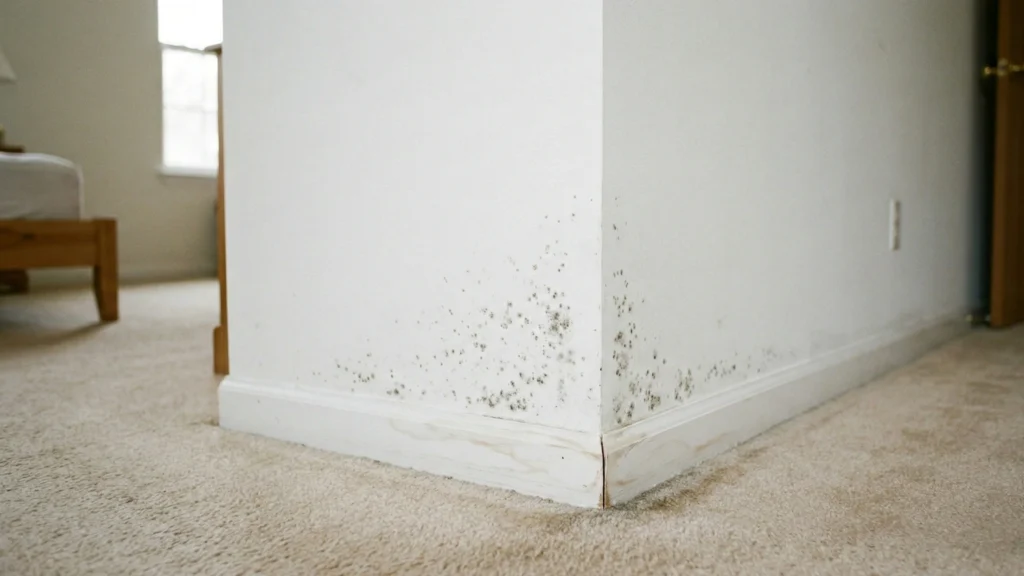
Step 3, Antimicrobial Treatment & Content Care. Any Category 2 or 3 water event requires EPA-registered antimicrobial application. Without it, bacterial growth and mold colonization can begin within 24-48 hours. We inventory and move all salvageable contents to our warehouse facility for cleaning and protected storage while structural work is underway. Items that won’t dry properly – carpet padding, contaminated drywall, saturated insulation – are removed and disposed of through licensed waste channels, with a chain-of-custody log maintained for your insurance file.
Step 4, Restoration, Documentation & Final Verification. After every material hits the IICRC dry standard on moisture readings, we move into rebuilding the affected areas. We replace drywall, insulation, flooring, and baseboards as the scope requires. Our final walkthrough with thermal imaging cameras and moisture meters checks that every zone has reached dry standard. A complete documentation package goes to your adjuster – before/after photos, daily moisture logs, equipment records, and cause-of-loss report. Direct billing coordination means most homeowners with covered damage pay nothing out of pocket.
See Why CUSTOMERS Love Us

Mark Decker
Fire Damage Restoration

Promptly came to evaluate problem, quickly resolved it, and went well beyond expectations in restoring area. Alfred and John did a super job!

Jeff G
Water Damage Restoration
Best at what they do! Came quick and gave me a very reasonable price for the scope of the job. Absolutely recommend.
Mark Decker
Fire Damage Restoration
Promptly came to evaluate problem, quickly resolved it, and went well beyond expectations in restoring area. Alfred and John did a super job!
Washington Water Damage: Causes & Response
Washington Township properties have specific water damage risks worth knowing about, as one of Gloucester County’s largest and fastest-growing townships, with mid-century developments in Turnersville and Grenloch, planned communities in Sewell, plus modern subdivisions along Route 42 and Black Horse Pike. Aging township sewer infrastructure, sandy loam soil transitioning to Pine Barrens edge, Grenloch Lake flood exposure, and increasingly severe storms contribute to frequent flooding, sewage backups, and hidden moisture problems. Knowing why these risks exist, and what to do when water damage happens, protects your home and your insurance claim.
Why Washington Homes See More Water Damage
Much of the residential housing stock in Washington Township, Turnersville, Sewell, and Grenloch was built during periods when drainage systems were designed for very different rainfall conditions than what the region sees today. Heavy rain events have become more frequent and intense in Gloucester County, storms overwhelm older French drains, sump pump systems, and municipal stormwater infrastructure faster than the original construction was designed to handle.
The sandy loam soil common across Washington Township adds a different water damage dynamic than clay-heavy regions. Water percolates quickly in some areas but pools in low-lying sections. Over years, hydrostatic pressure forces moisture through block walls, floor joints, and basement seams, especially in homes built before 1970 without modern waterproofing standards. Properties along Grenloch Lake, Big Timber Creek, and Chestnut Branch face significant flood risk during major storm events.
Sewage Backups in Older Gloucester County Neighborhoods
Sewage backups hit hardest in older neighborhoods where homes connect to deteriorating municipal sewer lines or clay-pipe laterals that have cracked over the years. Once sewage water contacts porous materials, those materials typically need to come out. We contain the area, remove contaminated material, and treat all surfaces with EPA-registered disinfectants. Call (215) 399-6538 for sewage backup response. We arrive in 60 minutes and begin containment immediately.
Water Damage Categories (IICRC S500 Standard)
The IICRC S500 restoration standard defines three categories of water damage based on contamination source. Proper category identification protects the restoration crew, the homeowner, and the occupants. The three categories: Cat 1 clean water, Cat 2 gray water with contaminants, Cat 3 black water requiring complete decontamination.
- Category 1 (clean water), burst supply pipes, overflowing sinks, appliance supply-line failures. Water itself is not contaminated, but becomes Category 2 within 24-72 hours if left standing.
- Category 2 (gray water), washing machine discharge, dishwasher overflow, toilet overflow without solids. Contains biological or chemical contaminants; affected carpet padding and drywall typically must be removed rather than dried in place.
- Category 3 (black water), sewage backups, river flooding, storm drain overflow, or Category 1/2 water left more than 72 hours. All porous materials in contact must be removed; antimicrobial treatment is required before reconstruction.
Philadelphia’s aging sewer laterals make Category 3 events common in older Turnersville and Grenloch sections along Delsea Drive and Black Horse Pike.
What to Do While You Wait for Our Crew
- Turn off the water source at the main supply valve, typically found in the basement or utility room near the meter. A main shutoff that won’t fully close requires immediate plumber involvement. The faster you shut it off, the less extraction our crew needs to do.
- Cut power to affected rooms at the breaker box, especially if water has approached outlets or the panel itself. Never assume the power is off – verify at the panel before entering standing water. This step prevents electrical injury, which is the most immediate danger in a water event.
- Do not use household fans or A/C – they push moisture deeper into wall cavities and adjacent rooms, not out of the building. Our equipment can reach moisture inside wall cavities and subfloors – household fans cannot. Wait for our crew before attempting any drying measures.
- Photograph and video every affected area before any cleanup, mitigation, or material removal – photo evidence is essential for claims. Get close-up shots of water staining, damaged materials, and affected belongings. We recommend both photos and video – the more evidence, the better.
- Call Sunrise at (215) 399-6538 for 60-minute emergency response.
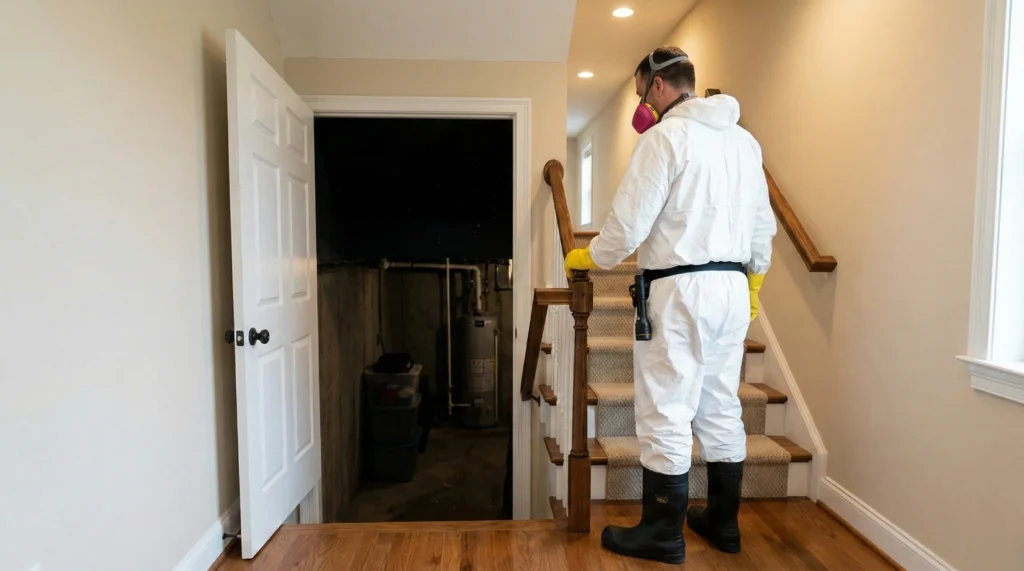
Avoid all contact with sewage or black water without protective gear – Category 3 water includes raw sewage, which carries dangerous pathogens invisible to the naked eye. Wait for our crew to arrive – sewage cleanup is not a DIY job.
When to Call a Professional
Water that has penetrated wall cavities, subfloors, or structural assemblies cannot be handled with consumer tools. When damage involves sewage contamination, hidden moisture, or has sat longer than 24 hours, mold and structural risk escalate hourly. Each hour converts restorable materials into disposal costs. Sunrise responds within 60 minutes, documents to IICRC S500 standards, and bills your insurance carrier directly.
Serving Washington & Gloucester County
Sunrise provides 24/7 emergency restoration services throughout Washington Township, Turnersville, Grenloch, Sewell, Cross Keys, Blackwood, Pitman, and Williamstown, plus all of Gloucester County, Camden County, and Salem County. Call (215) 399-6538 for a 60-minute response anywhere in this service area.
Service Areas
Your Local Water Damage Restoration Experts
Our Washington Township service area extends throughout Gloucester County and into neighboring counties across NJ: We cover residential and commercial properties, from single-family homes to multi-unit buildings. BBB accredited. Licensed and insured in PA and NJ.
Pennsylvania (PA)
Bucks County
Montgomery County
Philadelphia County
Lehigh County
Berks County
New Jersey (NJ)
Burlington County
Camden County
Gloucester County
Mercer County
WHY Sunrise Water Damage Restoration
Frequently Asked Questions
Get clear, honest answers about emergency extraction, structural drying, and the insurance claims process. Questions not covered here? We pick up 24/7.
Page last updated: August 2026 · Content reviewed by Sunrise IICRC-certified restoration team · IICRC S500 Standard for Professional Water Damage Restoration
Counties We Serve
Sunrise Water Damage Restoration provides 24/7 emergency response across eight counties in Pennsylvania and New Jersey. Click any county for local details, response times, and cities served.
