
24/7 Emergency
Water Damage Restoration in Mercer County, NJ
Water damage in Mercer County runs from Delaware River flooding in Trenton to clay-soil foundation seepage in Princeton and Hopewell and sewer failures in Hamilton, but the response starts the same way: fast extraction and calibrated drying. Sunrise technicians are IICRC-certified under the S500 standard – every job is documented with moisture readings, category classification, and daily drying logs. We handle full recovery from extraction through reconstruction, billing your insurance carrier directly so most Mercer County homeowners pay $0 out of pocket on covered claims. See our full services.
Call Now: 215-399-6538
Request Emergency Service

24/7 Emergency Response

Residential & Commercial

Insurance Billed Directly
Beyond Mercer County, our crews respond throughout neighboring Burlington County, Bucks County, PA, and Middlesex County. Same 24/7 response window, same IICRC-certified process, same direct insurance billing.
Services Included
Mercer County Comprehensive Water Damage Solutions
We provide a full range of water damage restoration – from the first call through final repair. We’ve completed jobs ranging from single-room floods to full-building losses. Our 60-minute response standard means extraction starts fast – before secondary damage adds to your claim. Every job includes full insurance documentation. We’ve worked with all major carriers in the area.

Water Damage Services
IICRC-certified water damage response for Mercer County: fast dispatch, certified crews, and insurance-direct billing from first call. Trenton flood-zone properties, Princeton Victorian-era homes, and Hamilton suburban developments all served. Most covered claims: $0 out of pocket.

Water Loss Cleanup
IICRC S500-compliant drying for Mercer County properties. Trenton’s pre-1900 brick construction and Princeton’s Victorian-era masonry require desiccant dehumidifiers and extended drying cycles. Hamilton and Robbinsville modern frame construction uses standard LGR setups. Insurance documentation provided.

Basement Water Damage
Flooded basement in Mercer County? We extract, dry, and document: moisture meters track every wall, floor, and joist until confirmed dry. Princeton and Hopewell hillside homes with sump pit failures often have clay-rich Piedmont soil against foundation walls – extended monitoring required. Direct insurance coordination.

Flood Cleanup
After Delaware River flooding in Trenton or Assunpink Creek overflow in Hamilton, we respond fast: truck-mounted extraction, industrial drying, and complete flood documentation. NFIP flood claim documentation provided for properties in mapped flood zones. Most covered claims: $0 out of pocket.

Water Pump Outs
Standing water removal for Mercer County properties: high-capacity extraction handles Delaware River flood events, creek overflow, and sump pump failure. Trenton riverside properties during major flood events get priority response. Most covered extraction claims billed direct to insurance.

Drying & Dehumidification
After water damage in Mercer County, we dry to the IICRC standard. Princeton and Hopewell Piedmont clay soils keep moisture near foundations weeks after a flood event – moisture meters run through multiple cycles until every assembly confirms dry. No early pack-up.

Storm Damage Cleanup
IICRC-certified storm cleanup for Mercer County: water intrusion to final restore. Delaware River flood events from spring snowmelt and major storm systems require thorough category assessment and complete NFIP documentation. Reconstruction coordination available.

Sewage Cleanup
Sewage backup in Mercer County? We contain, extract, and decontaminate correctly. Trenton’s pre-1900 sewer infrastructure makes Category 3 events common in the city’s older districts – licensed disposal of all contaminated material, EPA-registered disinfection, and complete insurance documentation are all standard. 24/7 emergency response.
Our Services
Residential and Commercial Water Damage Services
Residential Water Damage
We restore homes and commercial properties damaged by leaks, flooding, basement water intrusion, and plumbing failures. We use protective covering and containment to prevent cross-contamination during mitigation. All restoration work follows IICRC S500 standards, whether residential or commercial.
Commercial Water Damage
Multi-unit buildings, retail centers, and office parks get the same 24/7 response as residential clients – with commercial-grade equipment and documented work for insurance claims. We respond within 60 minutes, day or night, including holidays. Drying timelines depend on materials and square footage. We give realistic estimates and update you as conditions change. Response within 60 minutes. Commercial losses don’t improve with time – call now.
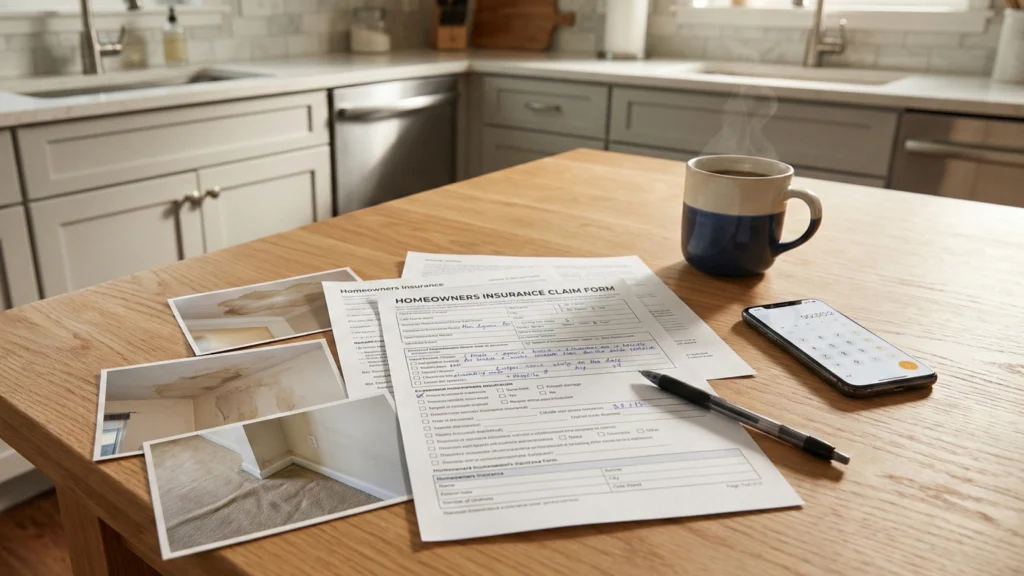
Insurance Claims Handled
Why Choose Sunrise for Water Damage?
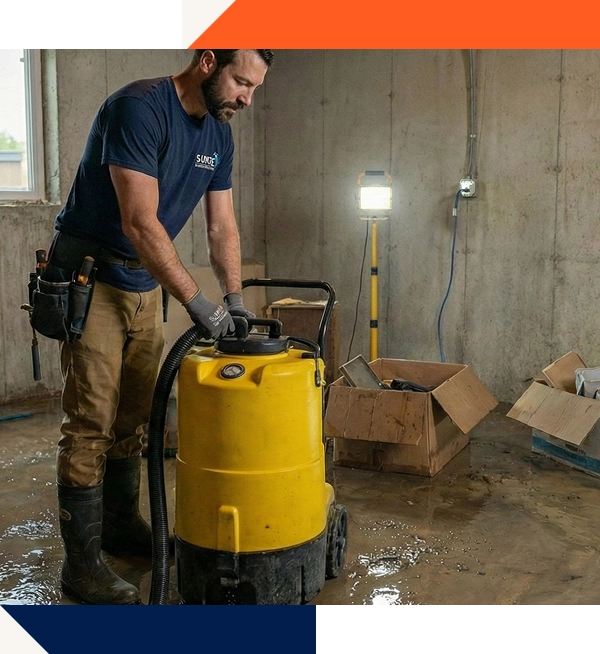
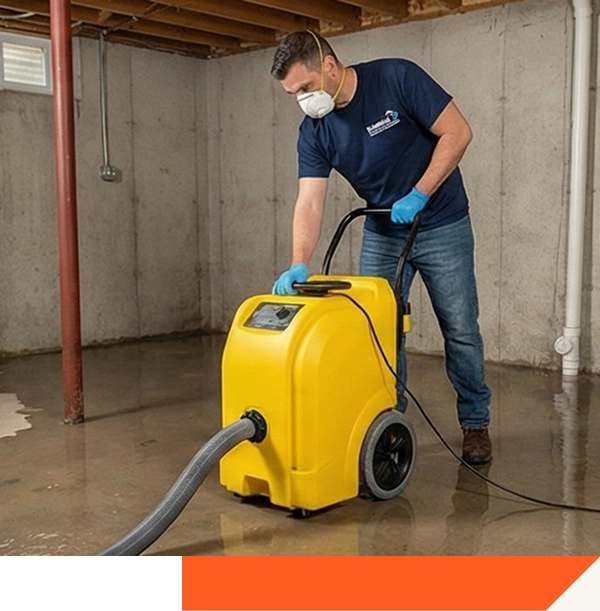
Water Damage Restoration Services
Insurance Claims Handled
Insurance Claims Support
Commercial water damage services across Mercer County: emergency extraction, containment, structural drying, and reconstruction with minimal disruption to your business.

Water Damage Restoration Process
Step 1, Emergency Response & Inspection (within 60 minutes). The clock starts the moment you call. Our crew arrives within 60 minutes, stops the active water source where possible, and begins a calibrated assessment. Thermal imaging cameras and calibrated moisture meters reveal moisture trapped behind drywall, underneath flooring, and in structural voids. Everything is captured in photographs before equipment setup. Per IICRC S500 standard, we classify the event by Category (Cat 1 clean / Cat 2 gray / Cat 3 black) and Class (1-4), then produce a mitigation plan that goes directly to your insurance adjuster. Assessment time: 30-60 minutes.
Step 2, Water Extraction & Structural Drying. Standing water comes out first, using truck-mounted extraction at 100+ gallons per minute. Any Category 3 or sewage-source event: containment barriers go in before extraction to prevent cross-contamination. LGR (Low Grain Refrigerant) dehumidifiers and commercial air movers handle structural drying. Cavity attachments reach inside wall assemblies where surface methods can’t penetrate. All materials are logged for moisture daily until IICRC dry standard is achieved. Drywall runs 3-5 days, hardwood 5-10 days, concrete 7-14 days.
What most homeowners discover mid-job is that water damage restoration is a more involved process than it first appears. Restoration can mean pulling out and replacing drywall, baseboards, flooring, and insulation depending on how far the moisture spread. Sewage-sourced and exterior flood events demand full material removal and sanitization of the affected zone before reconstruction is possible. When both fire and water damage are involved, we coordinate a combined restoration effort. Direct insurance billing on covered events means most homeowners face zero out-of-pocket costs.
Step 3, Antimicrobial Treatment & Content Care. EPA-registered antimicrobials are applied on all Category 2 and 3 water damage jobs to block bacterial growth and prevent mold from taking hold. We document and remove salvageable contents to our warehouse, where items are cleaned and stored securely throughout the restoration. Non-salvageable materials – carpet padding, contaminated drywall, saturated insulation – are removed and disposed of through licensed channels. A chain-of-custody log is maintained for your insurance documentation.
Step 4, Restoration, Documentation & Final Verification. We wait for all materials to reach the IICRC dry standard – confirmed by moisture readings – before beginning reconstruction. All damaged materials – drywall, insulation, flooring, baseboards – are replaced. Our final walkthrough with thermal imaging cameras and moisture meters checks that every zone has reached dry standard. A full documentation package – before/after photos, moisture logs, equipment records, cause-of-loss report – goes directly to your insurance adjuster. Direct billing coordination means most covered claims result in $0 out of pocket.
See Why CUSTOMERS Love Us

Mark Decker
Fire Damage Restoration

Promptly came to evaluate problem, quickly resolved it, and went well beyond expectations in restoring area. Alfred and John did a super job!

Jeff G
Water Damage Restoration
Best at what they do! Came quick and gave me a very reasonable price for the scope of the job. Absolutely recommend.
Mark Decker
Fire Damage Restoration
Promptly came to evaluate problem, quickly resolved it, and went well beyond expectations in restoring area. Alfred and John did a super job!
Mercer County Water Damage: Causes & Response
Mercer County’s water damage profile is shaped by the Delaware River’s flood history in Trenton, creek systems cutting through suburban Hamilton and Lawrence, and the Piedmont geology under Princeton and Hopewell that creates both clay soil drainage problems and high water table conditions. Trenton’s pre-1900 infrastructure makes it one of the highest-risk urban cores in the region for sewage backup events. Princeton’s Victorian-era housing stock carries its own set of aging pipe challenges. The right response varies by location and contamination category – both of which we assess at arrival.
Why Mercer County Homes See More Water Damage
The Delaware River at Trenton has a documented history of major flood events, with the 100-year flood elevation reaching into residential and commercial areas along the river corridor in Trenton and Ewing. Assunpink Creek and Stony Brook amplify the risk for Hamilton and West Windsor communities during major storm events, backing up through storm drains and into basements. Princeton and Hopewell sit on Piedmont clay-bearing soils where groundwater moves laterally against foundation walls during sustained wet periods rather than percolating down. Sump pump systems in Princeton and Hopewell’s hill areas are often original equipment in homes built before 1990, running without battery backup on circuits that lose power during the storms that trigger flooding.
Sewage Backups in Trenton and Older Mercer Neighborhoods
Trenton’s sewer infrastructure includes lateral pipes installed before 1900 in the city’s older residential and commercial districts. Combined with a combined sewer system that routes stormwater and sanitary flows together in the oldest sections, heavy rain events push Category 3 water into basements across much of the central city. Ewing and older sections of Hamilton share similar infrastructure age profiles. We respond to sewage backup events county-wide, establish containment before touching affected material, remove all Category 3-contacted porous materials through licensed waste channels, apply EPA-registered disinfectants to every affected surface, and provide complete documentation for your insurance adjuster.
Water Damage Categories (IICRC S500 Standard)
Water damage falls into three categories under the IICRC S500 standard, each reflecting the contamination level. Getting the category right on the initial assessment is critical to a safe and effective restoration outcome. The three categories: Cat 1 clean water, Cat 2 gray water with contaminants, Cat 3 black water requiring complete decontamination.
- Category 1 (clean water), burst supply pipes, overflowing sinks, appliance supply-line failures. Water itself is not contaminated, but becomes Category 2 within 24-72 hours if left standing.
- Category 2 (gray water), washing machine discharge, dishwasher overflow, toilet overflow without solids. Contains biological or chemical contaminants; affected carpet padding and drywall typically must be removed rather than dried in place.
- Category 3 (black water), sewage backups, river flooding, storm drain overflow, or Category 1/2 water left more than 72 hours. All porous materials in contact must be removed; antimicrobial treatment is required before reconstruction.
Mercer County’s pre-1900 sewer infrastructure in Trenton and combined sewer sections in older Ewing and Hamilton neighborhoods makes Category 3 basement backups among the most common water damage events in the county.
What to Do While You Wait for Our Crew
- Turn off the water source at the main supply valve – find it near the water meter in the basement or utility closet. Locate this valve before you ever have a water emergency – it’s worth knowing in advance. The faster you shut it off, the less extraction our crew needs to do.
- Cut power to affected rooms at the breaker panel if water is near outlets, fixtures, or the electrical panel. When in doubt, treat water near electricity as an emergency and stay out of the area. This step prevents electrical injury, which is the most immediate danger in a water event.
- Do not use household fans or A/C – household equipment spreads the problem instead of containing it. The engineering of professional drying equipment is fundamentally different from household fans. Wait for our crew before attempting any drying measures.
- Photograph and video every affected area before our crew moves anything – your adjuster will need this evidence to process the claim. More documentation is always better than less. We recommend both photos and video – the more evidence, the better.
- Call Sunrise at (215) 399-6538 for 60-minute emergency response.
Treat sewage-contaminated water as a biological hazard – do not contact it without PPE – sewage contains active pathogens including fecal bacteria, viruses, and parasites that cause serious infection. Wait for our crew to arrive – sewage cleanup is not a DIY job.
When to Call a Professional
Discoloration on ceilings or walls, soft drywall, or persistent moisture odors are not solvable with consumer tools. Water damage that has reached insulation, framing, or subfloor material requires industrial drying equipment. Each hour converts restorable materials into disposal costs. Sunrise responds within 60 minutes, documents to IICRC S500 standards, and bills your insurance carrier directly.
Serving Mercer County
Sunrise provides 24/7 emergency restoration services throughout Mercer County – Hamilton, Trenton, Ewing, West Windsor, East Windsor, Lawrence, Princeton, Hopewell, Robbinsville, and all surrounding communities. Call (215) 399-6538 for a 60-minute response anywhere in this service area.
Service Areas
Your Local Water Damage Restoration Experts
Our crews respond across Mercer County 24 hours a day, 7 days a week – rapid dispatch, certified drying protocol, and direct insurance billing on every job. Call (215) 399-6538 anytime.
Cities We Serve in Mercer County
Cities in Mercer County
Montgomery County
Philadelphia County
Lehigh County
Berks County
New Jersey (NJ)
Burlington County
Camden County
Gloucester County
Mercer County
WHY Sunrise Water Damage Restoration
Frequently Asked Questions
We answer these questions constantly from homeowners facing response time, drying process, mold risk, and insurance coordination. Questions not covered here? We pick up 24/7.
Page last updated: August 2026 · Content reviewed by Sunrise IICRC-certified restoration team · IICRC S500 Standard for Professional Water Damage Restoration
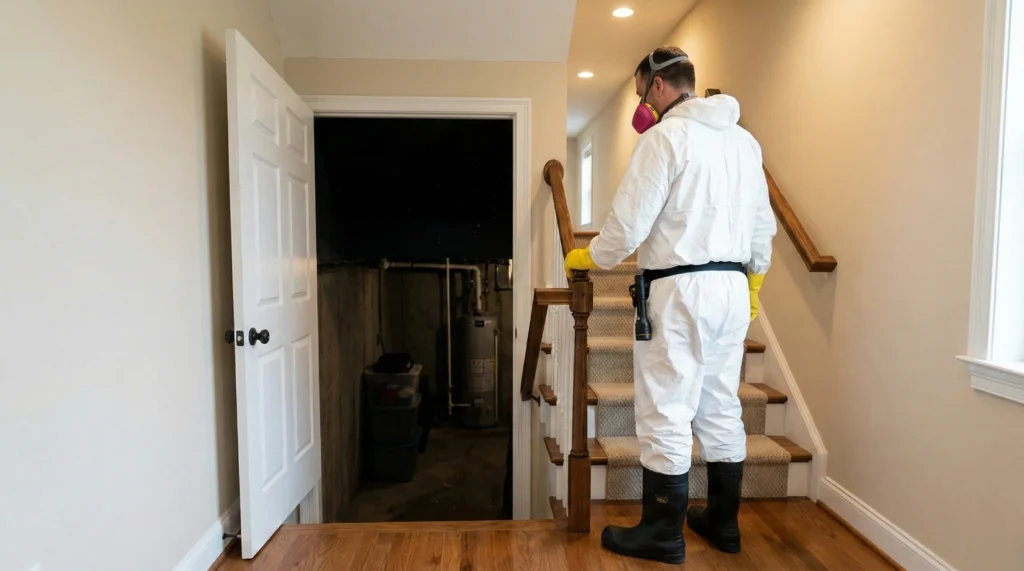
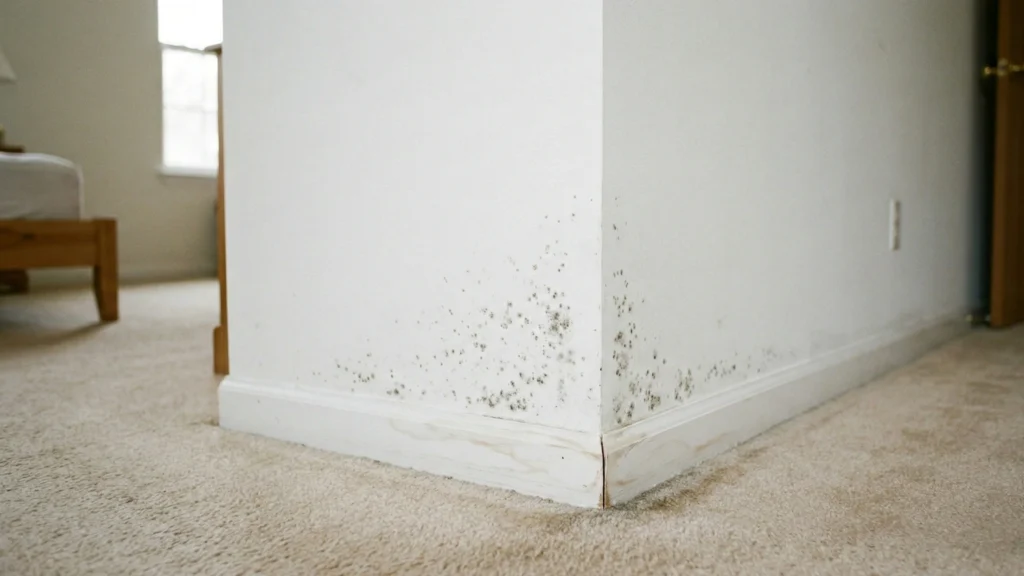
Other Counties in Our Service Area
Our team is strategically positioned for rapid response across the following neighboring counties:
