
24/7 Emergency
Water Damage Restoration in Fountain Hill, PA
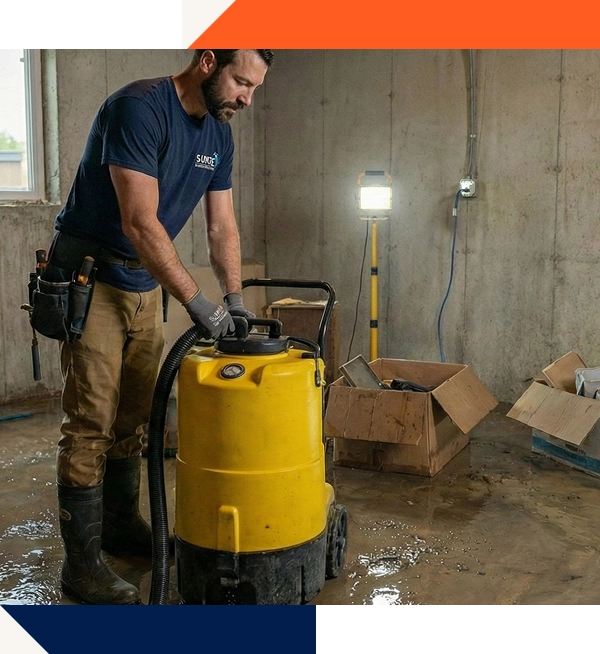
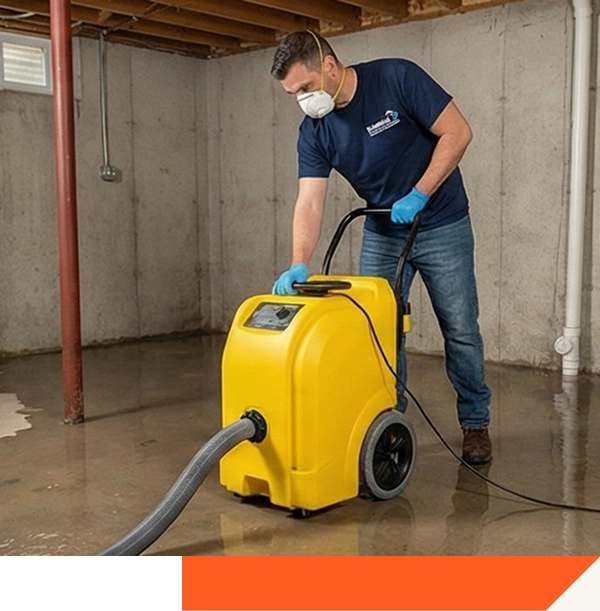
Small hillside borough with 1880s Victorian rowhomes and steep-slope stormwater challenges. A Fountain Hill water damage call means we stage from our nearest crew location and aim to be on-site within 60 minutes with full extraction equipment. We use commercial-grade extraction units pulling 100+ gallons per minute, paired with calibrated moisture meters to track progress until every material hits the IICRC dry standard. Insurance billing is handled on our end – we submit the scope, photos, and daily logs directly to your carrier, and most covered Fountain Hill claims close at $0 out of pocket. Learn more about our process.
Call Now: 215-399-6538
Request Emergency Service

24/7 Emergency Response

Residential & Commercial

Insurance Billed Directly
In addition to Fountain Hill, we handle water damage emergencies in nearby Allentown and Emmaus – with unified 60-minute dispatch across all these communities.
Services Included
Fountain Hill, PA Comprehensive Water Damage Solutions
We provide a full range of water damage restoration – from the first call through final repair. Our IICRC S500-certified crews follow a structured protocol: extract, dry, verify, restore. We manage the paperwork so you can focus on your family or business.

Water Damage Services
24/7 water damage mitigation for Fountain Hill – certified, insured, fast. Truck-mounted extraction, commercial dehumidifiers, and moisture meters track every job to the dry standard. BBB accredited. Call 215-399-6538.

Water Loss Cleanup
Fast cleanup after any water loss event in Fountain Hill: Calibrated moisture meters confirm every wall, floor, and joist is dry before we close the job. IICRC S500-compliant protocol.

Basement Water Damage
Basement flooding in Fountain Hill handled by IICRC-certified crews – 24/7. Commercial-grade air movers and LGR dehumidifiers run until every basement surface confirms dry. Direct insurance coordination on every job.

Flood Cleanup
24/7 flood damage response for Fountain Hill: pump out, dry out, restore. Category and class classification under IICRC S500, with daily moisture logs submitted to your insurer. Licensed, insured, IICRC-certified.

Water Pump Outs
Standing water extracted fast for Fountain Hill homes after any flooding event. After pump-out, LGR dehumidifiers and air movers run until every surface hits the dry standard. Licensed and insured for Fountain Hill and Lehigh County.

Drying & Dehumidification
IICRC-standard drying with daily moisture monitoring in Fountain Hill. Refrigerant dehumidifiers for high-humidity summer jobs; desiccant units for tight basements and crawl spaces. Prevents secondary mold growth.

Storm Damage Cleanup
After any storm hits Fountain Hill, we respond fast with extraction and tarping: Tarping, water extraction, tree-impact cleanup, and structural drying all handled. 24/7 emergency dispatch.

Sewage Cleanup
Black water remediation for Fountain Hill: certified containment, extraction, decontamination. Extraction, containment, structural drying, and post-treatment air quality verification. 24/7 emergency response.
Our Services
Residential and Commercial Water Damage Services
Residential Water Damage
Sunrise handles residential and commercial water damage restoration for properties of all sizes. Our approach minimizes disruption while protecting structural integrity and salvageable finishes. Commercial clients also benefit from our direct insurance billing and IICRC S500-compliant documentation.
Commercial Water Damage
From storefronts to office complexes, we restore commercial properties fast. Every hour of downtime costs money, and we work around your schedule to limit that. IICRC S500-certified technicians handle every commercial job. We’ve handled commercial losses in multi-floor office buildings, strip malls, apartment complexes, and manufacturing facilities across the region. We bill insurance directly – no large upfront costs while restoration is in progress.
Insurance Claims Handled
Why Choose Sunrise for Water Damage?
Water Damage Restoration Services
Insurance Claims Handled
Insurance Claims Support
Commercial water damage response for Fountain Hill businesses – office buildings, retail, restaurants, medical, and mixed-use properties – with fast containment to minimize business interruption.

Water Damage Restoration Process
Step 1, Emergency Response & Inspection (within 60 minutes). We operate on a 60-minute arrival window. Our first priority is stopping the active water source; once controlled, we begin a complete inspection using professional equipment. Thermal imaging cameras and calibrated moisture meters reveal moisture trapped behind drywall, underneath flooring, and in structural voids. Every affected area is photographed before equipment placement. IICRC S500 guides our classification: Category (Cat 1 / Cat 2 / Cat 3) and Class (1-4). Before leaving the initial inspection, we prepare a documented mitigation plan for your insurance adjuster. Assessment takes 30-60 minutes.
Step 2, Water Extraction & Structural Drying. Truck-mounted extraction units clear standing water at 100+ gallons per minute – far faster than portable equipment. Sewage or Category 3 water intrusions get containment barriers installed first – no exceptions. Commercial air movers run across saturated surfaces and LGR (Low Grain Refrigerant) dehumidifiers remove moisture from the air. Cavity drying attachments handle wall assemblies where surface equipment has no effect. Every affected material is checked daily for moisture until it reaches IICRC dry standard. Typical drying: 3-5 days for drywall, 5-10 days for hardwood, 7-14 days for concrete.
Most people don’t realize how much is involved in proper water damage restoration – it goes well past drying. The project scope may grow to include removing and replacing drywall, baseboards, flooring, and insulation. Fountain Hill Borough’s aging sewer laterals – some dating to the 1880s – make Category 3 events common in the historic hillside district and older sections along Broadway. Sewage-sourced and exterior flood events demand full material removal and sanitization of the affected zone before reconstruction is possible. When fire or smoke damage is part of the picture alongside water damage, we handle both as part of a single coordinated restoration. Covered claims are billed directly to your insurer – most homeowners pay $0.
Step 3, Antimicrobial Treatment & Content Care. Any water event classified as Category 2 or 3 calls for EPA-registered antimicrobial treatment – without it, mold and bacterial colonization begin quickly. Contents that can be saved are inventoried and moved to our secure contents warehouse for cleaning and storage during restoration. Unsalvageable materials – carpet padding, contaminated drywall, saturated insulation – are taken out and disposed of via licensed channels with chain-of-custody records included for your insurance adjuster.
Step 4, Restoration, Documentation & Final Verification. We wait for all materials to reach the IICRC dry standard – confirmed by moisture readings – before beginning reconstruction. Drywall, insulation, flooring, and baseboard replacements are made as the damage scope requires. A final thermal imaging and moisture meter inspection verifies all materials are at dry standard. Documentation delivered to your adjuster includes before/after photos, daily moisture logs, equipment records, and cause-of-loss report. We coordinate direct billing so most homeowners with covered water damage pay $0 out of pocket.
See Why CUSTOMERS Love Us

Mark Decker
Fire Damage Restoration

Promptly came to evaluate problem, quickly resolved it, and went well beyond expectations in restoring area. Alfred and John did a super job!

Jeff G
Water Damage Restoration
Best at what they do! Came quick and gave me a very reasonable price for the scope of the job. Absolutely recommend.
Mark Decker
Fire Damage Restoration
Promptly came to evaluate problem, quickly resolved it, and went well beyond expectations in restoring area. Alfred and John did a super job!
Fountain Hill Water Damage: Causes & Response
Fountain Hill properties have specific water damage risks worth knowing about, as a small hillside borough overlooking Bethlehem with 19th-century industrial-era rowhomes and Victorian singles clustered along Broadway and hillside streets, plus mid-century development in adjacent Salisbury Township. Aging borough sewer laterals, clay-heavy soil, hillside stormwater runoff, and increasingly severe storms contribute to frequent flooding, sewage backups, and hidden moisture problems. Knowing why these risks exist, and what to do when water damage happens, protects your home and your insurance claim.
Why Fountain Hill Homes See More Water Damage
Much of the residential housing stock in Fountain Hill Borough, South Bethlehem, and Salisbury Township was built during periods when drainage systems were designed for very different rainfall conditions than what the region sees today. Heavy rain events have become more frequent and intense in Lehigh County, storms overwhelm older French drains, sump pump systems, and municipal stormwater infrastructure faster than the original construction was designed to handle.
The clay-heavy soil common across the Fountain Hill hillside adds another layer of risk. Clay holds moisture and doesn’t drain well, so water pools around foundations instead of dissipating. Over years, hydrostatic pressure forces moisture through stone foundations in historic hillside rowhomes and block walls in newer construction. Properties at the bottom of hillside streets and near Lehigh River tributaries face additional flood risk during major storm events.
Sewage Backups in Older Lehigh County Neighborhoods
Older properties with clay-pipe lateral connections are at constant risk of sewage backup. Tree root intrusion is the most common cause, and the result is always Category 3 contamination. Heavy rainfall overloads aging combined sewer systems and sends contaminated water back upstream. When contaminated water enters through basement floor drains, toilets, or shower fixtures, it’s classified as Category 3 – the highest risk level requiring professional cleanup. We document every sewage backup for insurance purposes – cause, affected area, Category 3 classification, and remediation steps.
Water Damage Categories (IICRC S500 Standard)
IICRC S500 uses a three-category system to classify water damage by contamination source and risk level. Understanding the category is the first step – it tells us what we can save and how we treat the affected area. Category 1 is clean water, Category 2 is gray water, and Category 3 is black water requiring hazmat-level protocols.
- Category 1 (clean water), burst supply pipes, overflowing sinks, appliance supply-line failures. Water itself is not contaminated, but becomes Category 2 within 24-72 hours if left standing.
- Category 2 (gray water), washing machine discharge, dishwasher overflow, toilet overflow without solids. Contains biological or chemical contaminants; affected carpet padding and drywall typically must be removed rather than dried in place.
- Category 3 (black water), sewage backups, river flooding, storm drain overflow, or Category 1/2 water left more than 72 hours. All porous materials in contact must be removed; antimicrobial treatment is required before reconstruction.
Philadelphia’s aging sewer laterals make Category 3 events common in historic Fountain Hill Borough and older sections along Broadway.
What to Do While You Wait for Our Crew
- Turn off the water source at the main valve – typically near the water meter in the basement or mechanical room. If the valve is corroded or won’t close, call a plumber and our dispatch simultaneously. Getting this done fast limits how much water enters the structure.
- Cut power to affected rooms at your panel for affected areas – any room where water has contacted or approached electrical components. If the panel is compromised, call your utility company to cut power at the meter. Power off before entry is a rule, not a suggestion.
- Do not use household fans or A/C – they spread moisture and mold spores into areas not yet affected. Professional air movers and dehumidifiers work together to dry structural assemblies, not just surfaces. This is one of the most common mistakes we see homeowners make.
- Photograph and video every affected area before any cleanup begins – the visual record is critical for your insurance claim. Photograph contents, structural damage, and water staining from multiple angles.
- Call Sunrise at (215) 399-6538 for 60-minute emergency response.
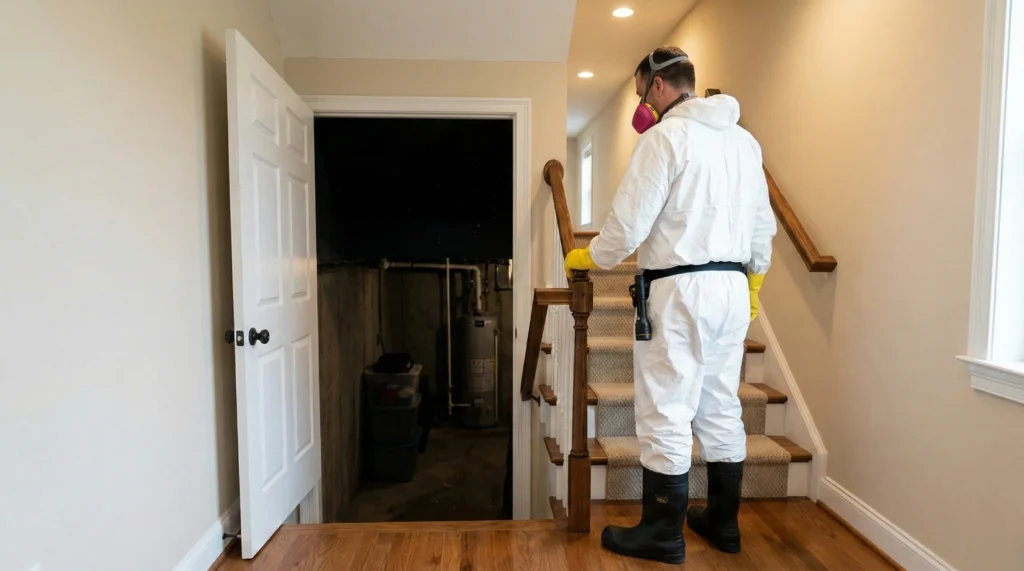
Never handle black water or sewage without appropriate protective equipment – black water is biologically active and contains pathogens that penetrate skin and mucous membranes. Sunrise crews handle sewage events with full PPE and proper decontamination protocols.
When to Call a Professional
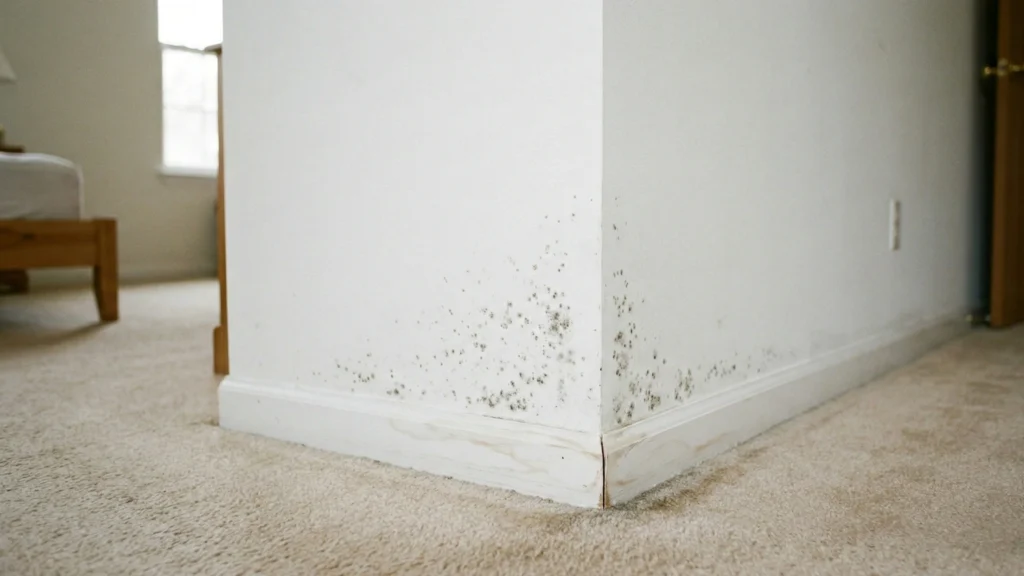
If you are smelling mildew, finding soft spots in walls, or seeing staining – professional assessment is the next step. Sewage backups, damage older than 24 hours, and hidden moisture all require professional mitigation. Delay costs money – each hour increases the likelihood that drywall, subfloor, and insulation must be removed rather than dried. Sunrise arrives within 60 minutes, follows IICRC S500 protocol, and bills your insurance carrier directly.
Serving Fountain Hill & Lehigh County
Sunrise provides 24/7 emergency restoration services throughout Fountain Hill, Bethlehem, Salisbury, Hellertown, Center Valley, Allentown, and South Bethlehem, plus all of Lehigh County, Northampton County, and Berks County. Call (215) 399-6538 for a 60-minute response anywhere in this service area.
Service Areas
Your Local Water Damage Restoration Experts
Serving Fountain Hill and the surrounding Lehigh County area, plus all communities listed below: IICRC-certified crews with truck-mounted units serve the entire Lehigh County region. Most covered claims: $0 out of pocket.
Pennsylvania (PA)
Bucks County
Montgomery County
Philadelphia County
Lehigh County
Berks County
New Jersey (NJ)
Burlington County
Camden County
Gloucester County
Mercer County
WHY Sunrise Water Damage Restoration
Frequently Asked Questions
Most property owners have the same concerns when dealing with water damage costs, insurance coverage, and how the restoration process works. Call if you need specifics for your situation.
Page last updated: August 2026 · Content reviewed by Sunrise IICRC-certified restoration team · IICRC S500 Standard for Professional Water Damage Restoration
Counties We Serve
Sunrise Water Damage Restoration provides 24/7 emergency response across eight counties in Pennsylvania and New Jersey. Click any county for local details, response times, and cities served.
