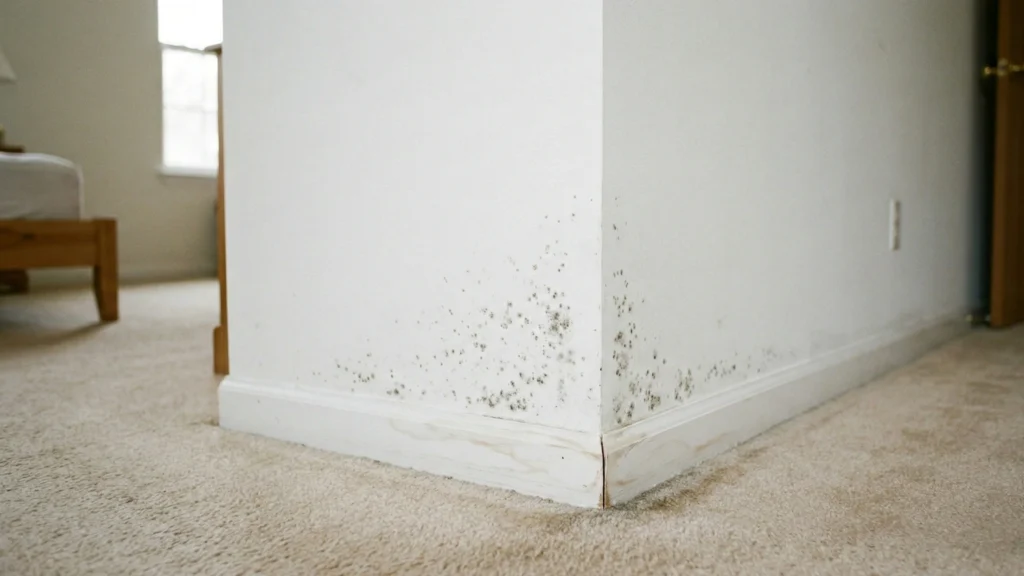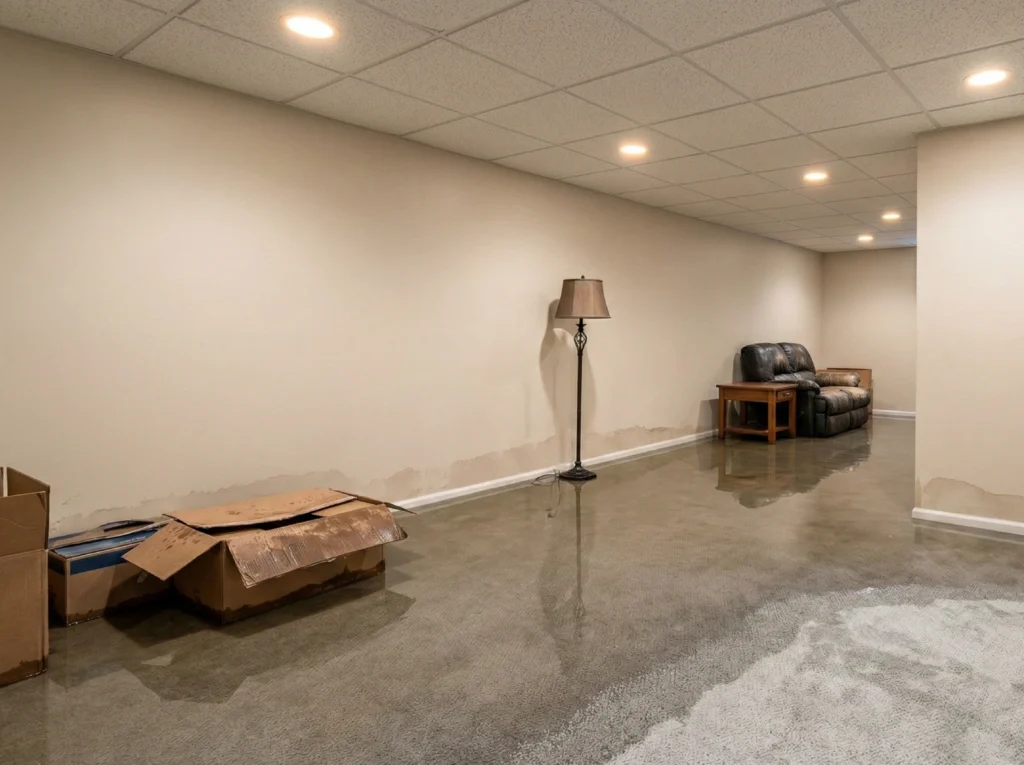


A sewage backup in your basement is not just a mess. It is a health emergency that requires immediate professional response. Sewage water, classified as Category 3 or “black water” in the restoration industry, contains bacteria, viruses, parasites, and other pathogens that pose serious health risks to anyone who comes in contact with it.
If you are dealing with a sewage backup right now, stop reading and call a professional. Do not attempt to clean it yourself. If the backup is contained and you have a few minutes, this guide covers what you need to know about why sewage backups are dangerous, what to do and what to avoid, what commonly causes backups in the Bucks County and Montgomery County area, and how professional cleanup works.
Why Sewage Backups Are Classified as Emergencies
The restoration industry classifies water contamination into three categories. Category 1 is clean water from supply lines. Category 2 is “gray water” from appliances or overflows with some contaminants. Category 3 is “black water,” which includes sewage, and it is the most hazardous.
Sewage water can contain E. coli, salmonella, hepatitis, giardia, and other dangerous pathogens. Exposure can occur through direct skin contact, inhalation of airborne contaminants, or contact with contaminated surfaces. The health risk is especially serious for children, elderly individuals, and anyone with a compromised immune system.
Beyond the immediate health hazard, sewage water saturates porous materials quickly. Drywall, carpet, insulation, wood, and personal belongings that come in contact with sewage often cannot be cleaned or salvaged and must be removed and disposed of following proper safety protocols.
The longer sewage water sits in your basement, the more extensive the contamination becomes, the higher the health risk, and the more costly the cleanup.
What to Do Immediately After a Sewage Backup
Get everyone out of the affected area
Do not enter the flooded area if you can avoid it. Keep children and pets away. If sewage has backed up into living spaces, consider temporarily relocating until the area has been professionally cleaned and cleared.
Turn off electricity to the affected area if you can do so safely
If your breaker panel is accessible without entering the contaminated area, turn off power to the basement or affected zones. Standing sewage water combined with electrical outlets, appliances, or wiring creates a serious electrocution hazard. If you cannot access the panel safely, leave it and let the restoration team handle it.
Do not attempt to clean sewage yourself
This is the most important point. Sewage cleanup requires specialized personal protective equipment (PPE), containment procedures, and sanitization protocols that go well beyond what household cleaning products can accomplish. Mopping, shop-vacuuming, or bleaching a sewage-affected area does not make it safe and can actually spread contamination.
“I have walked into jobs where the homeowner tried to clean up a sewage backup with a mop and some bleach. And I understand the instinct, you see the mess and you want to deal with it. But sewage is not something you can clean with household products. The bacteria and pathogens in that water require professional-grade sanitization. Your health is not worth the risk.”
— Kieth, Field Technician, Sunrise Water Damage
Ventilate the area if possible without entering it
If you can open windows or exterior doors leading to the basement without stepping in contaminated water, do so. Ventilation helps reduce the concentration of harmful airborne contaminants and gases like hydrogen sulfide, which produces the distinctive rotten egg smell associated with sewage.
Call a professional restoration company
A restoration company equipped to handle Category 3 water will arrive with the proper equipment, PPE, and protocols to safely extract the sewage, remove contaminated materials, sanitize the area, and begin the drying process. Call as soon as possible. The faster cleanup begins, the less damage your property will sustain and the lower the health risk for your household.
Contact your insurance company
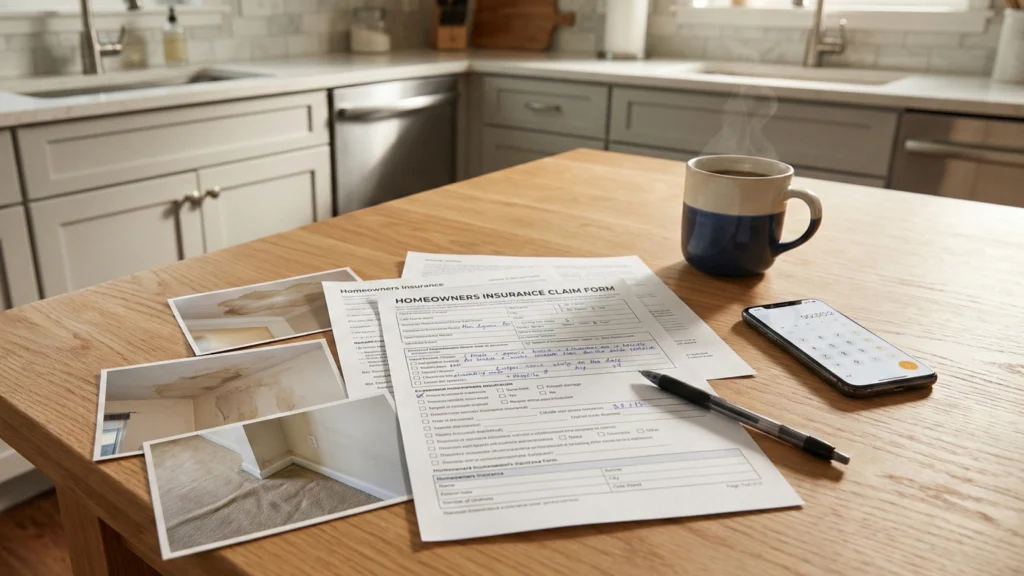
Report the backup to your insurance carrier promptly. Sewage backups may be covered if you have sewer and water backup coverage on your policy (a separate endorsement from standard homeowners insurance). Your restoration company can help coordinate documentation and communication with your adjuster.
What NOT to Do During a Sewage Backup
Do not flush toilets, run water, or use drains until the cause of the backup has been identified and resolved. Additional water flow can worsen the backup.
Do not use household fans to try to dry the area. Fans can spread contaminated airborne particles throughout the basement and into other areas of the home.
Do not eat or drink anything that has come into contact with the contaminated area, including food stored in a flooded basement refrigerator or freezer.
Do not attempt to salvage porous items like carpet, padding, upholstered furniture, mattresses, clothing, or paper goods that have been saturated with sewage. These materials absorb contaminants and generally cannot be effectively sanitized.
Do not use bleach as a substitute for professional sanitization. Bleach can reduce surface bacteria on non-porous materials, but it does not penetrate porous materials and does not address the full spectrum of pathogens present in sewage.
Common Causes of Sewage Backups in Bucks County and Montgomery County
Sewage backups are not random events. They have identifiable causes, and several of them are especially common in the Bucks County, Montgomery County, and Philadelphia region.
Combined sewer systems
Parts of the greater Philadelphia area, including some older neighborhoods, use combined sewer systems that carry both stormwater and sanitary sewage in the same pipes. During heavy rain events, these systems can become overwhelmed, causing sewage to back up into homes through basement drains and floor drains.
Tree root intrusion
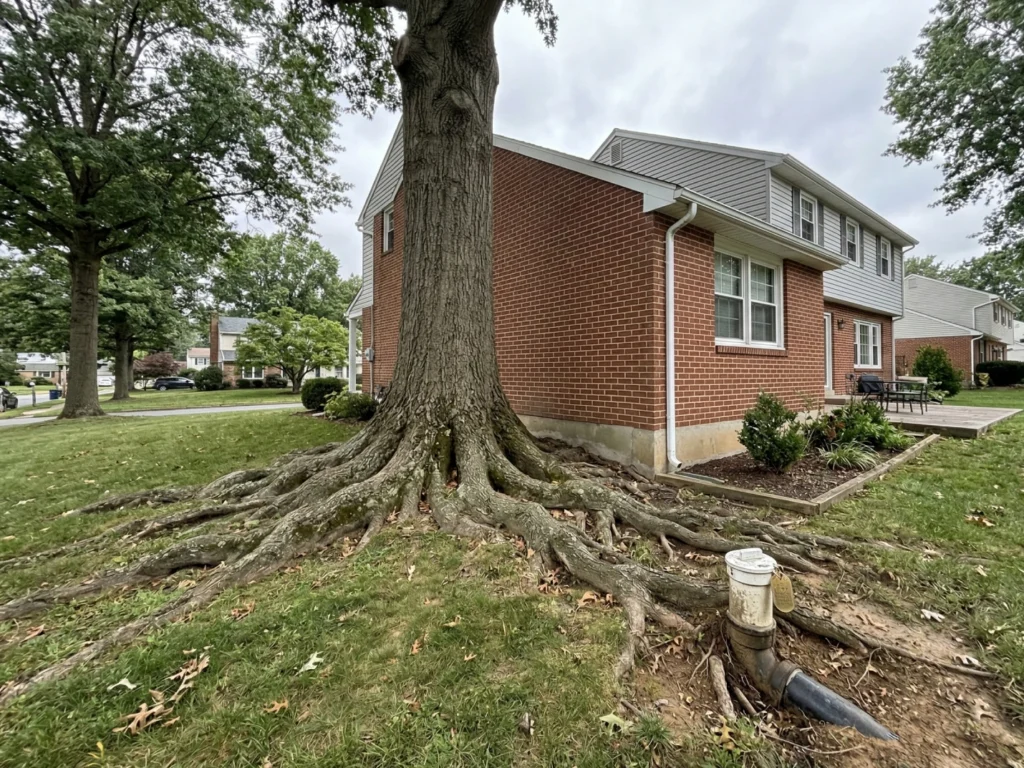
Mature trees are common throughout Bucks County and Montgomery County neighborhoods. Tree roots naturally seek out moisture and can grow into sewer laterals (the pipe connecting your home to the municipal sewer main) through small cracks or joints. Over time, root intrusion can partially or fully block the line, causing sewage to back up into the home.
“Tree roots are probably the number one cause of sewer backups we see in this area. People love their big old trees, and I get it, but those roots will find any crack in a sewer line. If you have mature trees near your sewer lateral and you have not had the line scoped in a while, it is worth doing before you end up with sewage in your basement.”
— Alfred, Founder, Sunrise Water Damage
Aging sewer infrastructure
Many homes in the region were built with clay, cast iron, or Orangeburg (bituminized fiber) sewer lines that deteriorate over decades. Cracked, collapsed, or bellied pipes restrict flow and make backups more likely. Homes built before the 1970s are especially prone to this issue.
Sump pump failure
Sump pumps are a frontline defense against basement water intrusion in this region. When a sump pump fails due to a mechanical issue, power outage, or overwhelmed capacity during a heavy storm, water can back up into the basement. If the sump system is connected to or near the sanitary line, the backup may include sewage.
Grease and debris buildup
Household grease, wipes, and other materials that should not enter the drain system can accumulate over time and contribute to blockages in both the home’s plumbing and the sewer lateral.
How Professional Sewage Cleanup Works
Professional sewage cleanup follows a structured process designed to eliminate health hazards, prevent secondary damage, and restore the affected area to safe, livable conditions.
Step 1: Safety assessment and containment
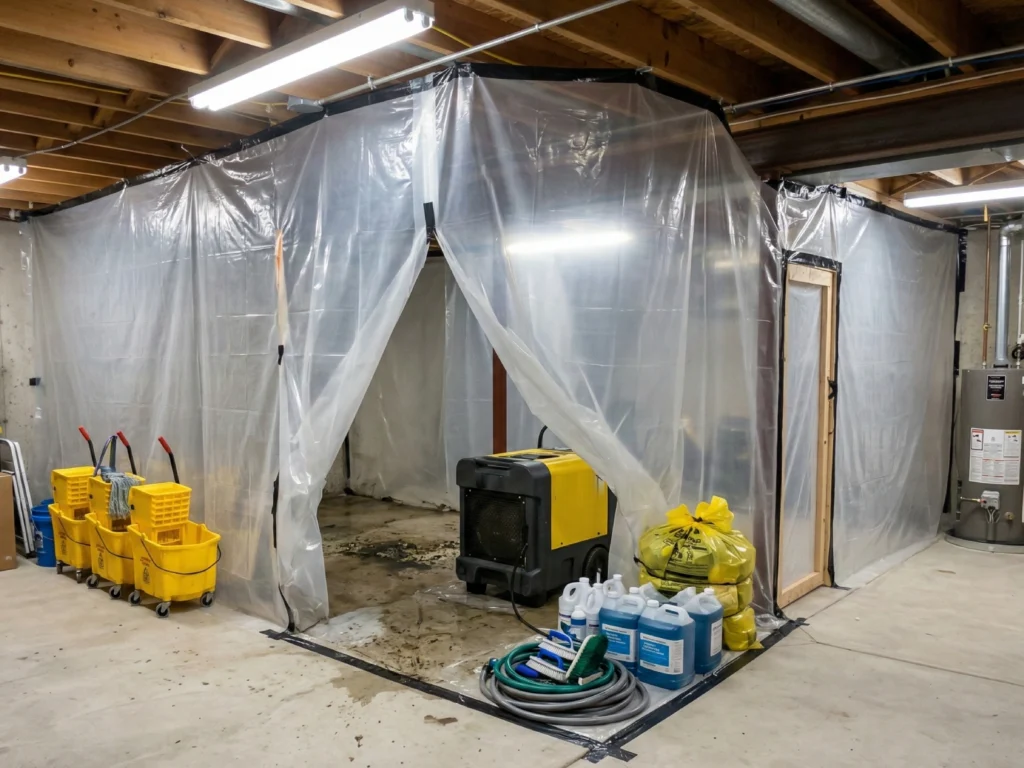
The restoration team assesses conditions before entering the affected area. This includes identifying electrical hazards, gas line concerns, and the extent of contamination. Containment is set up to prevent the spread of contaminants to unaffected areas of the home.
Step 2: Sewage extraction and removal
Contaminated water is extracted using professional equipment rated for Category 3 water. Standing sewage is removed as quickly as possible to limit the penetration of contaminants into building materials.
Step 3: Contaminated material removal
Porous materials that have absorbed sewage, such as drywall (typically cut to a height above the contamination line), carpet, padding, insulation, and damaged personal belongings, are carefully removed and disposed of following proper waste handling protocols.
Step 4: Cleaning and sanitization
All remaining surfaces are thoroughly cleaned and sanitized using professional-grade antimicrobial and disinfectant products. This includes floors, wall framing, concrete surfaces, and any structural components that were exposed to contamination.
Step 5: Drying and dehumidification
After cleaning, the area is dried using commercial dehumidifiers and air movers to bring moisture levels back to an acceptable range. This step is critical for preventing mold growth, which can begin within 24 to 48 hours in moist conditions.
Step 6: Documentation and insurance coordination
Throughout the process, the restoration team documents conditions, affected materials, and all work performed. This documentation supports your insurance claim and provides a clear record of the remediation effort. A restoration company that works directly with insurance carriers can handle communication with your adjuster and help streamline approvals.
Does Insurance Cover Sewage Backup Cleanup?
Standard homeowners insurance typically does not cover sewage backups unless you have purchased a specific endorsement for sewer and water backup coverage. This endorsement is available from most carriers and is generally affordable.
If you have the endorsement and the backup is caused by a sudden event (such as a blockage or system failure), the cost of professional cleanup, material removal, drying, and restoration may be covered under your policy minus your deductible.
If you do not have the endorsement, the cost of cleanup and restoration is typically an out-of-pocket expense. Given the average cost of professional sewage cleanup, adding this coverage before you need it is one of the most practical steps a homeowner can take.
If you are unsure whether your policy includes sewer backup coverage, call your insurance agent and ask. If it does not, ask about adding it. The cost of the endorsement is almost always a fraction of the cost of a single cleanup event.
Additional Resources
The EPA recommends that sewage-contaminated water damage be handled by experienced professionals. For more on cleanup guidelines, see the EPA’s Mold Cleanup in Your Home guide, which covers contaminated water scenarios.
Frequently Asked Questions
Is sewage backup dangerous?
Yes. Sewage water is classified as Category 3 (black water) and contains bacteria, viruses, and parasites that pose serious health risks. Professional cleanup with proper safety protocols is required.
Can I clean a sewage backup myself?
Sewage cleanup should not be attempted without professional equipment and personal protective equipment. Household cleaning products are not sufficient to eliminate the pathogens present in sewage water, and improper cleanup can spread contamination and create ongoing health risks.
How quickly should a sewage backup be cleaned up?
As quickly as possible. The longer sewage sits in your home, the deeper contaminants penetrate into building materials, the greater the health risk, and the more costly the cleanup becomes. Mold can also begin growing within 24 to 48 hours in sewage-affected areas.
Does homeowners insurance cover sewage backups?
Only if your policy includes a sewer and water backup endorsement, which is a separate addition to standard homeowners insurance. Without this endorsement, sewage backup damage is typically not covered.
What should I do if sewage comes up through my basement floor drain?
Leave the area immediately, keep others away, and call a professional restoration company. Do not attempt to clean the water or use your plumbing until the cause has been identified and resolved.
Dealing With a Sewage Backup? Call Sunrise Water Damage Now
Sewage backups are health emergencies that require immediate professional response. Sunrise Water Damage provides 24/7 sewage cleanup services throughout Bucks County, Montgomery County, Delaware County, and select areas of Philadelphia. We work directly with insurance companies to handle documentation and reduce delays.