

One of the most common things homeowners hear after water damage is that mold can start growing within 24 to 48 hours. That timeline is accurate, and understanding why it matters can help you make better decisions in the critical hours after a water event.
Mold is not just a cleanup problem. It is a health concern, a structural concern, and an insurance concern. The faster moisture is removed from your property after water damage, the lower the likelihood that mold becomes part of the equation.
This guide explains how mold develops after water damage, what the timeline actually looks like, what conditions accelerate growth, and what you can do to protect your property, especially if you own a home in Bucks County, Montgomery County, or the greater Philadelphia area.
Why Mold Grows After Water Damage
Mold is not caused by water damage itself. Mold is caused by moisture that remains after the water is gone.
Mold spores are present in virtually every indoor and outdoor environment. Under normal conditions, they remain dormant and harmless. But when those spores land on a moist surface and have access to organic material (which includes drywall, wood, carpet, insulation, and even dust), they can begin to colonize and grow.
The three conditions mold needs to grow are moisture, an organic food source, and time. After water damage, the first two conditions are almost always present. The only variable you can control is time, which is why the speed of your drying response matters so much.
The Mold Growth Timeline After Water Damage
Here is what typically happens after a water event if moisture is not properly addressed.
Within 24 Hours
Mold spores begin absorbing moisture from wet materials. At this stage, there is no visible mold growth. The environment is being colonized at a microscopic level. This is the most important window for intervention. If professional drying and dehumidification begin within this period, the chances of preventing mold growth are highest.
“That first 24 hours is everything. If we can get our equipment in and start pulling moisture out of the walls and floors right away, we can almost always prevent mold from becoming part of the conversation. Once you get past 48 hours with wet materials, the odds shift against you.”
— Kieth, Field Technician, Sunrise Water Damage
24 to 48 Hours
Under favorable conditions (warm temperatures, high humidity, and organic material), mold colonies can begin forming on surfaces. Growth may not be visible yet, but the biological process is underway. Materials like drywall paper facing, carpet padding, and untreated wood are the most vulnerable during this window.
48 to 72 Hours
Visible mold growth may begin appearing on affected surfaces. This is the stage where homeowners often first notice discoloration, fuzzy patches, or a musty smell. Once mold is visible, it has already established colonies and may have released spores into the air. The scope of remediation needed increases significantly at this point.
1 Week
Mold that has been growing undisturbed for a week can spread across large surface areas and begin penetrating deeper into materials. Drywall, wood framing, carpet, and insulation can all become compromised. Air quality in the affected area may be noticeably impacted. At this stage, professional mold remediation is almost always required.
2 Weeks and Beyond
After two or more weeks, mold can become deeply embedded in structural materials, spread to adjacent rooms through air circulation, and create conditions that require extensive removal and replacement of building materials. The cost and complexity of remediation increase substantially with each passing week.
Conditions That Accelerate Mold Growth
Not all water damage situations lead to mold at the same rate. Several factors can speed up or slow down the timeline.
Temperature. Mold thrives in warm environments, typically between 60 and 80 degrees Fahrenheit. Most homes maintain temperatures in this range year-round, which means indoor mold growth is a risk in every season.
Humidity. High relative humidity (above 60%) creates conditions that support mold growth even without standing water. After water damage, humidity levels in the affected area can spike well above this threshold, especially in enclosed spaces like basements, closets, and wall cavities.
Material type. Porous organic materials like drywall, ceiling tiles, carpet, carpet padding, wood, and insulation are the most vulnerable to mold growth. Non-porous materials like metal, glass, and hard plastic are generally resistant, though mold can grow on dust and debris that has settled on these surfaces.
Air circulation. Stagnant air allows moisture to linger and mold spores to settle and colonize. Areas with poor ventilation, such as basements, crawlspaces, and interior closets, are at higher risk.
Darkness. Mold does not need light to grow. In fact, dark environments like wall cavities, under flooring, and inside ductwork are common locations for hidden mold growth after water damage.
Hidden Moisture: The Biggest Mold Risk After Water Damage
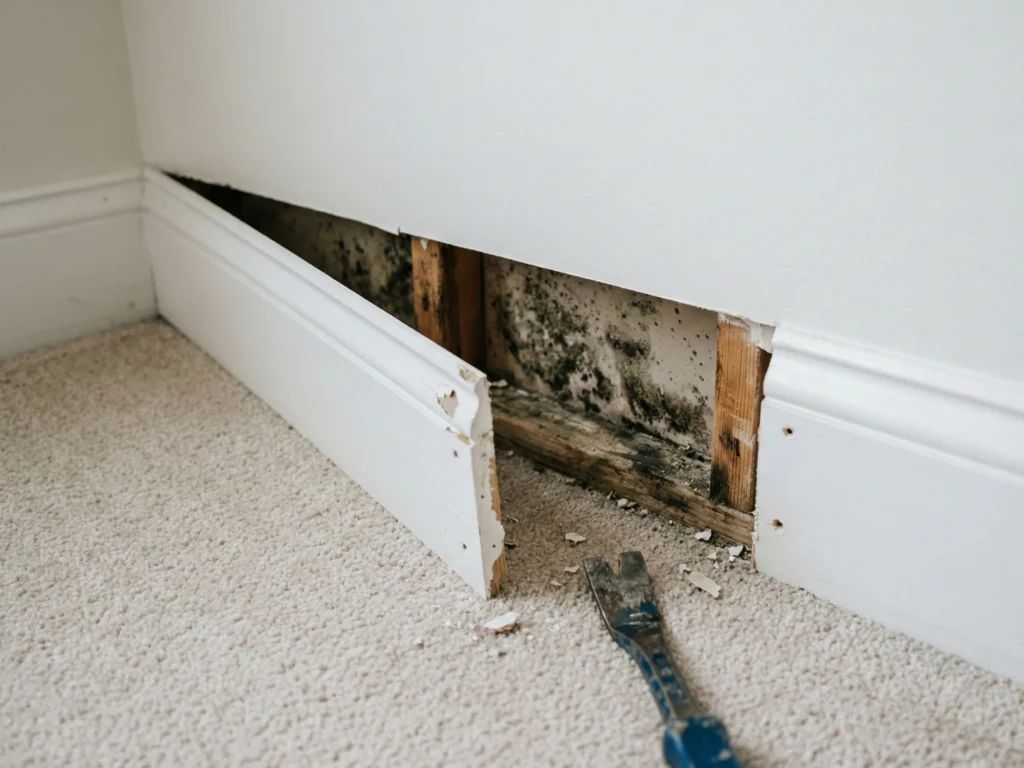
The most dangerous moisture after water damage is the moisture you cannot see. Standing water on a floor is obvious and gets addressed quickly. But moisture that has traveled into wall cavities, under flooring, behind baseboards, into insulation, and into subflooring can remain hidden for days or weeks.
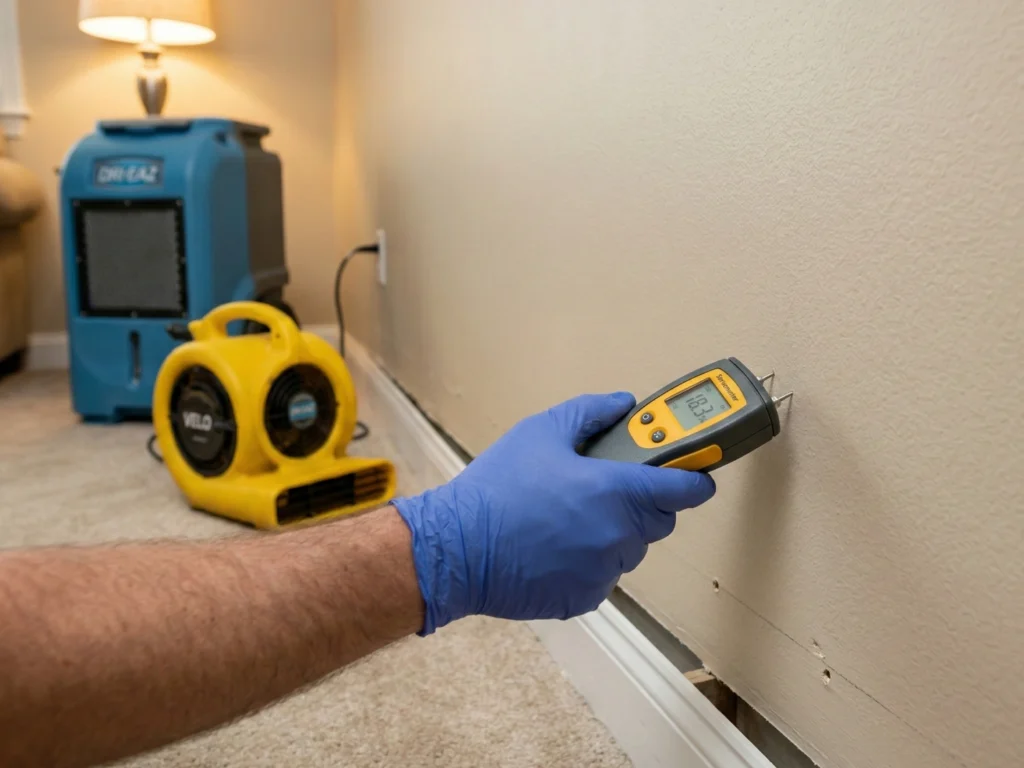
This hidden moisture is the primary driver of mold growth after water damage. It is also the reason why professional drying with moisture detection equipment is so important. Restoration professionals use moisture meters and infrared cameras to map where moisture is hiding, then place commercial-grade drying equipment specifically to address those areas.
Relying on visible drying alone, like waiting for a wet floor to look dry or running household fans, is one of the most common mistakes homeowners make after water damage. Surfaces can appear dry while materials underneath remain saturated.
Why Basements in Bucks County and Montgomery County Are Especially Vulnerable
Homeowners in Bucks County and Montgomery County face some specific conditions that increase the risk of mold growth after water damage.
Clay-heavy soil. The region’s soil composition traps water against foundations and increases hydrostatic pressure during heavy rain and spring snowmelt. This leads to higher rates of basement water intrusion, even in homes with sump pumps.
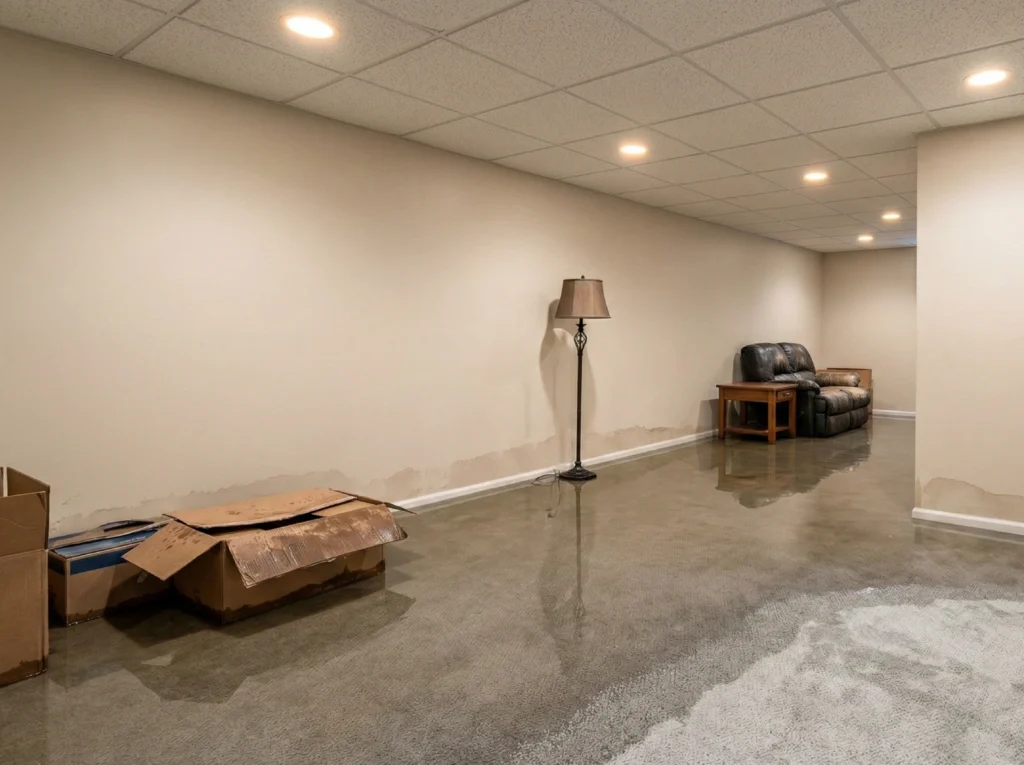
Older home construction. Many homes in the area feature stone, block, or poured concrete foundations that allow moisture to migrate through over time. Finished basements in these homes are especially vulnerable because the finishing materials (drywall, carpet, wood paneling) provide a food source for mold.
Seasonal humidity. Summers in the Philadelphia region bring high humidity levels that can compound the effects of existing moisture problems. A basement that experienced a minor water event in spring can develop mold growth through the summer if humidity is not controlled.
“We see it every year. A homeowner has a small water event in March or April, thinks they dried it out fine, and then calls us in July because they smell mold. The humidity here in the summer just feeds whatever moisture was left behind. If you had water in your basement this spring, do not just assume it dried out on its own.”
— Alfred, Founder, Sunrise Water Damage
Freeze-thaw cycles. Winter and early spring bring fluctuating temperatures that can cause pipe bursts, foundation cracking, and ice damming, all of which introduce water into the home and start the mold clock ticking.
How Professional Drying Prevents Mold After Water Damage
Professional drying is the single most effective way to prevent mold growth after a water event. Here is what the process involves and why it works.
Moisture mapping. Before any equipment is placed, a restoration professional uses moisture detection tools to identify every area where moisture is present, including behind walls and under flooring. This creates a complete picture of the affected area so nothing is missed.
Commercial-grade dehumidification. Professional dehumidifiers remove moisture from the air at a rate that household units cannot match. Reducing humidity levels below the threshold that supports mold growth is critical.
Strategic air movement. Industrial air movers are positioned to circulate air across wet surfaces, accelerating evaporation from materials like drywall, flooring, and structural wood.
Daily monitoring. Moisture readings are taken daily to track drying progress. Equipment is adjusted as conditions change. This process continues until all materials reach acceptable moisture levels, which is confirmed with documented readings.
Documentation. Moisture readings and drying logs are recorded throughout the process. This documentation supports insurance claims and provides a verifiable record that the property was dried properly.
When to Get a Mold Inspection After Water Damage
If water damage occurred and you are not sure whether mold has developed, a professional mold inspection can provide clarity. An inspection is recommended if any of the following apply.
The water damage occurred more than 48 hours ago and professional drying was not performed. You notice a musty or earthy smell in the affected area or adjacent spaces. You see discoloration on walls, ceilings, or floors that was not there before. The water came from a contaminated source like a sewage backup or external flooding. The affected area includes a basement, crawlspace, or other space with limited ventilation. Occupants are experiencing unexplained respiratory symptoms.
A mold inspection identifies whether mold is present, how extensive the growth is, and what conditions may be contributing to it. If needed, mold testing can confirm the type of mold involved and help guide remediation decisions.
Additional Resources
The EPA provides a comprehensive overview of mold, moisture, and prevention for homeowners in their Brief Guide to Mold, Moisture, and Your Home.
Frequently Asked Questions
Can mold grow in 24 hours?
Mold colonies can begin forming within 24 hours under favorable conditions (warm temperatures, high humidity, and access to organic material). Visible growth typically appears between 48 and 72 hours, but the colonization process starts much earlier.
Does all water damage lead to mold?
No. If water is removed quickly and the affected area is dried thoroughly within the first 24 to 48 hours, mold growth can usually be prevented. The risk increases significantly when moisture remains in materials for longer periods.
Can I prevent mold after water damage myself?
For very small, contained water events on non-porous surfaces, prompt cleanup and drying may be sufficient. For larger events, water that has entered walls, flooring, or structural materials, or water from contaminated sources, professional drying is strongly recommended to ensure all moisture is properly addressed.
How can I tell if mold is growing behind my walls?
Common signs include a persistent musty odor, discoloration or bubbling on the wall surface, and peeling paint or wallpaper. However, mold can grow behind walls with no visible signs. If you suspect hidden moisture or mold, a professional inspection with moisture detection equipment is the most reliable way to confirm.
Does insurance cover mold removal after water damage?
Mold may be covered by insurance when it results directly from a sudden, covered water loss. Coverage limits and exclusions vary by policy. Working with a restoration company that coordinates with insurance can help ensure proper documentation and support for mold-related claims.
Concerned About Mold After Water Damage? Sunrise Water Damage Can Help
If you have experienced water damage and are concerned about mold, do not wait. The faster moisture is addressed, the lower the risk of mold growth and the simpler the remediation process. Sunrise Water Damage provides professional drying, mold inspection, and mold remediation services throughout Bucks County, Montgomery County, Delaware County, and select areas of Philadelphia.
Call now to speak with our team and schedule an assessment.